

The best digital nomad jobs for beginners build on a skill you already have and need little more than a laptop and a steady connection. Where you can do them depends on time zones, employer rules and visa rules. For the wider picture of paid travel, see our overview of how to get paid to travel.
Eight digital nomad jobs for beginners to learn
- Customer support. You answer questions for a company by email, chat or phone. Many of these roles are employee positions with set shifts, so the time zone you are in matters more here than in the other jobs. Any retail, hospitality or service background carries over.
- Writing and editing. Blog posts, product descriptions, newsletters and proofreading. Clients judge you by samples, so two or three pieces you can show count for more than a long list of claims.
- Virtual assistance. You handle an inbox, a calendar, bookings and data entry for one client or a few. It suits someone who likes keeping things in order.
- Bookkeeping. You record transactions and reconcile accounts, usually in software the client already uses. Accuracy matters most. Some clients expect a qualification, so check what is asked for where your clients are based.
- Online tutoring. You teach a subject or a language one-on-one or in small groups. Lessons often fall in the evening or early morning, because that is when your students are free.
- Design. Social graphics, presentations, templates and simple branding for small businesses. Clients mostly look at a small portfolio.
- Web development. Building and maintaining sites. Small jobs such as fixing a contact form or updating a page are a realistic way in.
- Social media management. You schedule posts, reply to comments and report back for a small business. If you already run an account well, you have a head start.
How to pick one based on a skill you already have
Start with what people have already paid you for, or thanked you for.
- If you have worked a till or a front desk, customer support is the natural fit.
- The friend who fixes everyone's spelling can try editing or writing.
- Anyone who keeps the household spreadsheet might like virtual assistance or bookkeeping.
- Coaching or teaching in any form points to online tutoring.
- Making posters or slides for fun is a start in design.
- A site you built for yourself or a club is a first step toward web development.
Pick one and spend a few weeks on the tools that job uses. A short unpaid or low-cost test project for a friend or a local business gives you a sample and shows whether you enjoy the work.
How to find your first client or remote employer
There are two routes, and you can try both.
A remote employer. Search job boards with a remote filter, then read each posting for location rules. Some remote roles are open only to people in certain countries or time zones, and that rule can decide whether you can work from a given place. Apply where you meet most of the requirements, and describe your experience in terms a remote team cares about, such as written communication and the tools you have used.
Job scams exist. The FTC's job scams page describes work-from-home offers that charge for starter kits or training that turns out to be useless, and fake-check offers where the "employer" asks you to send money back. Be cautious about any remote job that asks you to pay for equipment or training, or to send money back, and research the company before you hand over personal details.
Freelance clients. Tell people you already know what you offer, because first clients often come from them. Build two or three samples. Then write to small businesses with a specific, useful suggestion, such as a product page with no description or a newsletter that has not gone out in months. Set your price per project before you send the proposal, and ask for part of the payment up front. Freelance income is variable: some months bring more work than others, so plan for the slow ones.
Practical questions to settle before you book a flight
- Time zones. Decide which hours you are willing to keep. A seven-hour gap with a client means either early mornings or late evenings for you.
- Internet. Ask your host for a recent speed test before you pay, and carry a backup such as a mobile hotspot.
- Your employer's rules. If you work for a company, ask whether it allows you to work from another country. Some do not.
- Taxes. Where you stay does not always change what you owe at home. The IRS says a US citizen or resident alien living abroad is taxed on worldwide income, and that the foreign earned income exclusion has conditions. For self-employed people, it also says the excluded amount does not reduce self-employment tax. The country you stay in may also have its own tax rules. If you are not a US taxpayer, check your own country's rules, and consider a short session with a tax professional before your first trip.
- Visas. A tourist stay may not allow you to work, even for a company back home, and the rules differ by country. Some countries offer a visa made for remote workers. Read the official immigration website of each country you plan to stay in, because the conditions change and a blog post, this one included, can go out of date.
If you also post about your trips
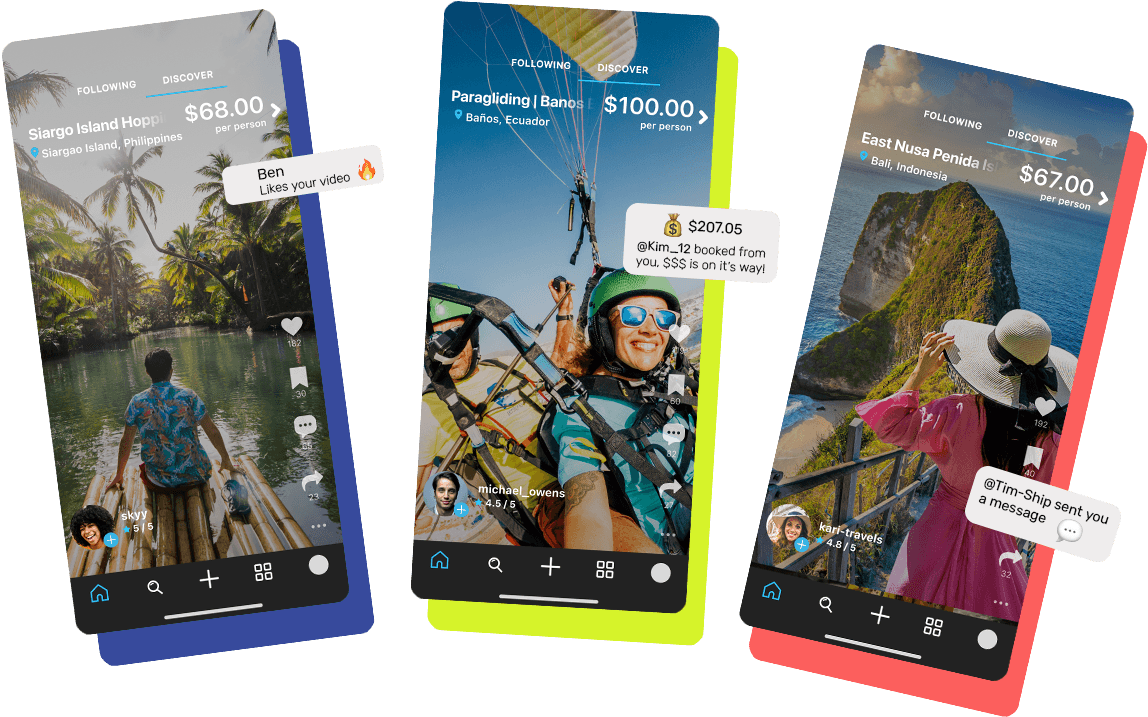
Some remote workers share what they do in the places they stay. Otsy's Creator Fund pays creators a commission when travelers book from their posts. Commissions depend on travelers booking, so they are not a fixed income, and a link that earns you money needs a clear disclosure, as the FTC's Endorsement Guides FAQ explains for affiliate links. Searching a destination such as Lisbon on Otsy shows experiences travelers can book.
FAQ
What is the easiest digital nomad job to start with?
It depends on your background. Customer support and virtual assistance build on skills many people already have, so they ask for the least new training. Writing, design and tutoring work well if you can show samples or a subject you know well.
Can I become a digital nomad with no experience?
Yes, if you start from something you can already do. Choose one job type, complete a small test project, and use it as your first sample before you apply or pitch.
Do I need a degree for these jobs?
Often not, especially for freelance work, where samples carry weight. Some fields, such as bookkeeping and teaching, may expect a qualification depending on the client or the country, so read each posting's requirements.
Do I need a visa to work remotely while I travel?
Possibly. A tourist stay may not cover work, and countries set their own rules. Check the official immigration site for the country you plan to visit before you book, and follow its terms.
Pick one skill and test it this month
Choose the job from the list that matches something you already do, and give yourself a month to produce one sample and send a few applications or pitches.