

There are three common ways to get paid to travel: a job where travel is part of the work, remote work you do from wherever you are, and income from the trips you share. None of them is a free vacation, so an offer that promises one with no work attached is worth double-checking before you hand over any money or details.
The three ways to get paid to travel
- Jobs that include travel. An employer pays you to be somewhere or to move people around: flight attendants, tour guides, cruise and resort staff, event crews.
- Remote and freelance work. Your pay does not depend on where you sit, so you pick the place: writing, design, software, customer support, bookkeeping, online teaching.
- Content and commissions. You share trips on social platforms or a travel app, and you earn when someone books or buys through what you posted.
Some people combine two of them, for example a freelancer who posts trip videos on the side.
Jobs that include travel
A travel job gives you a steady paycheck, but usually not a say in the destination. Flight attendants are the clearest case. The US Bureau of Labor Statistics describes variable work schedules that include evenings, weekends and holidays, and notes that attendants may be away from home several nights per week. The airline sets the schedule, and your routes depend on the airline's rules.
Tour guides and trip leaders work differently. You lead groups through one city or one route, so you learn a destination well instead of passing through many. Seasonal work with a local operator is one way to try guiding before you commit to it.
Requirements vary by employer and by country, so read the posting before you plan around a job. Employers often ask for customer service experience.
Remote work that goes where you go
Remote work needs a skill that employers or clients already pay for online, and a few practical questions come before the destination:
- Time zones. A seven-hour gap with your team decides which hours you work.
- Connection. Test the internet at your accommodation before you commit to a week there.
- Your employer's rules. Some companies restrict working from abroad, so ask before you book.
- Visas. A tourist visa often does not allow you to work, and the rules differ by country. Check the official immigration site for each place. Some countries offer longer-stay visas for remote workers.
Freelancers also face income that arrives unevenly. Line up a few clients before you leave, and keep a cash cushion for slow months.
Get paid for the trips you share
Travel content pays when people act on it. You post about a place or an experience, and when someone books or buys through your post, you earn a commission. Building an audience takes patience, and how much a post earns depends on whether travelers book from it, so treat the income as a supplement.
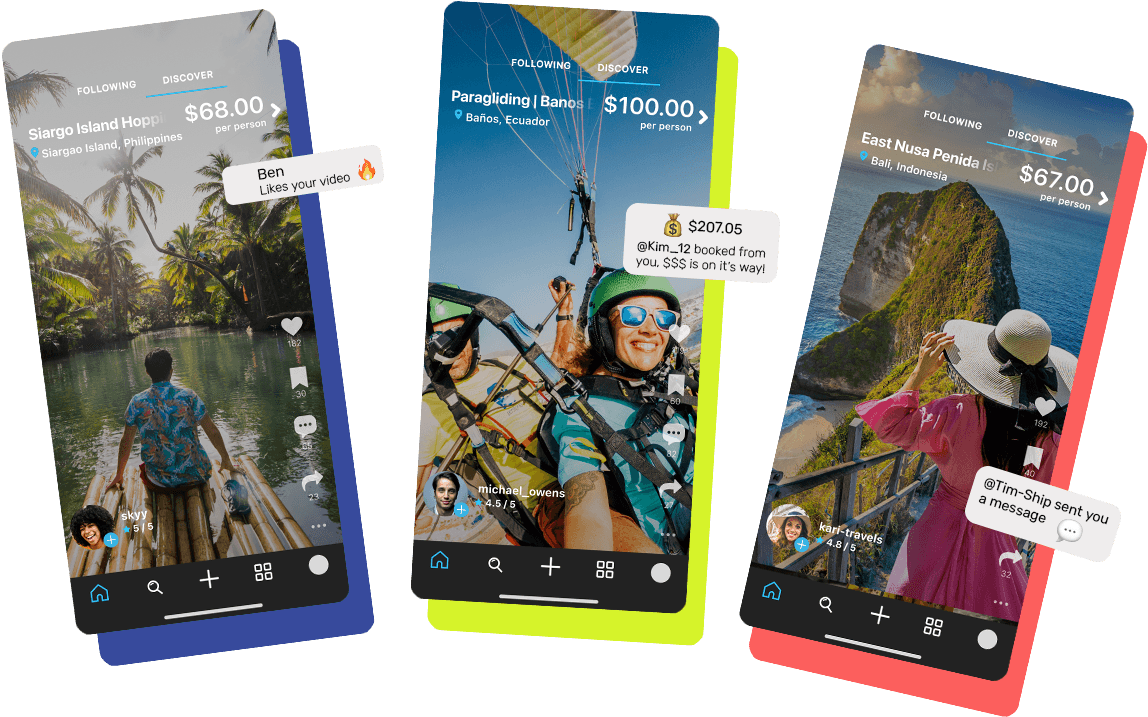
Otsy's Creator Fund is one program built this way. Creators repost travel content from other social platforms, and each post links to a bookable experience, such as a tour or show from the Las Vegas listings on Otsy. When a traveler books from the post, the creator earns a commission, which shows in real time in the Creator Portal inside the Otsy app and is paid to the creator's PayPal account. Joining is free: a creator connects PayPal and submits a W-9, and the Otsy team reviews the application.
A good first post covers what a planner needs to know: how long the experience took, what it cost, who it suits and who should skip it.
Wherever you post, tell your audience when you earn from a link. In the US, the Federal Trade Commission says to disclose any financial, employment, personal or family relationship with a brand, and that financial relationships "aren't limited to money". For commissions, its Endorsement Guides Q&A says to disclose the affiliate relationship both in videos and in the description near the links. Words like "ad" or "sponsored" are fine, a hashtag is allowed but not required, and vague terms like "sp" or "collab" are not. Place the disclosure where it is "hard to miss".
Which route fits you
If you need income soon, a travel job or a remote role comes with a regular paycheck. A skill you already sell online, such as writing or bookkeeping, goes with you if you freelance or work remotely. Content takes time to build, so keep other income going while it grows.
Whichever you choose, freelance and commission income is usually taxable, and the rules depend on where you live and work, so ask an accountant and check your tax authority (in the US, the IRS) before you start.
FAQ
Can I get paid to travel with no experience?
Some entry-level roles, such as seasonal tour work or hospitality jobs, may not ask for formal qualifications, and you can start posting your own trip content at once, though earning from it depends on a program or brand accepting you. A short stint in a customer-facing job still helps your application.
Do I need a special visa to work while I travel?
Often, yes. A tourist visa usually does not cover paid work, and the rules vary by country. Check the official immigration site for the country you plan to work from, and read the visa terms before you start.
Do I have to disclose paid or affiliate links?
In the US, the FTC expects it. Its influencer guidance says to disclose any financial, employment, personal or family relationship with a brand, and its Endorsement Guides Q&A says to disclose an affiliate relationship in the video and in the description near the links. Plain terms like "ad" or "sponsored" work with or without a hashtag. Rules differ in other countries, so check the ones where your audience lives.
Can I live on travel content income?
It depends on whether people book or buy from what you post. Treat it as extra income until you know how much it brings in, and keep your main income source in place while you find out.
Pick one route to try first
Start with the route you already have the pieces for, such as a freelance skill or a trip worth posting about, and give it a month before you add a second.