

There is no travel blogger salary, because a blogger usually works for themselves and gets paid by several sources, at different times and in different amounts. For a long stretch the total can be close to zero. We found no reliable public figure for what travel bloggers earn, so you will not find an average here.
Why there is no travel blogger salary
A salary comes from one employer who sets a rate and a pay schedule. A blog's income arrives from several places, such as an ad network, a booking partner, a brand or a client, each with its own rules and timing.
Two bloggers with the same number of readers can earn very different amounts, depending on whether those readers are planning a trip next month or reading for fun.
Why reliable figures are scarce
We found no source that collects pay data on travel bloggers the way an employer reports wages. The numbers that circulate online are often self-reported by bloggers or by companies that sell to them, and we found nothing showing that anyone checks them. People who earn little may be less likely to publish their results, so the figures you see probably lean toward the successful ones.
For that reason this post gives no income or timeline figures. If you see an "average travel blogger income" number, ask who measured it, over what period, and whether the person quoting it also sells a course or a tool.
Where travel blogger income comes from
Many bloggers who earn something combine several of these.
- Display ads. An ad network places ads on your pages and pays you for what they generate. Pay depends on how many people visit, where they live, which pages they read and what the network's rules allow, so read each network's terms before you apply.
- Affiliate commissions. You link to a hotel, tour, gear item or booking page, and you earn a commission when a reader buys through your link. This source rewards specific, useful recommendations from someone the reader trusts.
- Sponsored posts. A brand or tourism board pays you to cover something. Brands look for readers who match their customers.
- Products and services. Itinerary guides, photo presets, a paid newsletter, trip-planning consultations or small-group trips you organize. You keep more of each sale, and you also do the selling and the support.
- Freelance work the blog brings in. Editors, brands and clients hire you for writing, photography or consulting after reading your site, so the blog works as your portfolio.
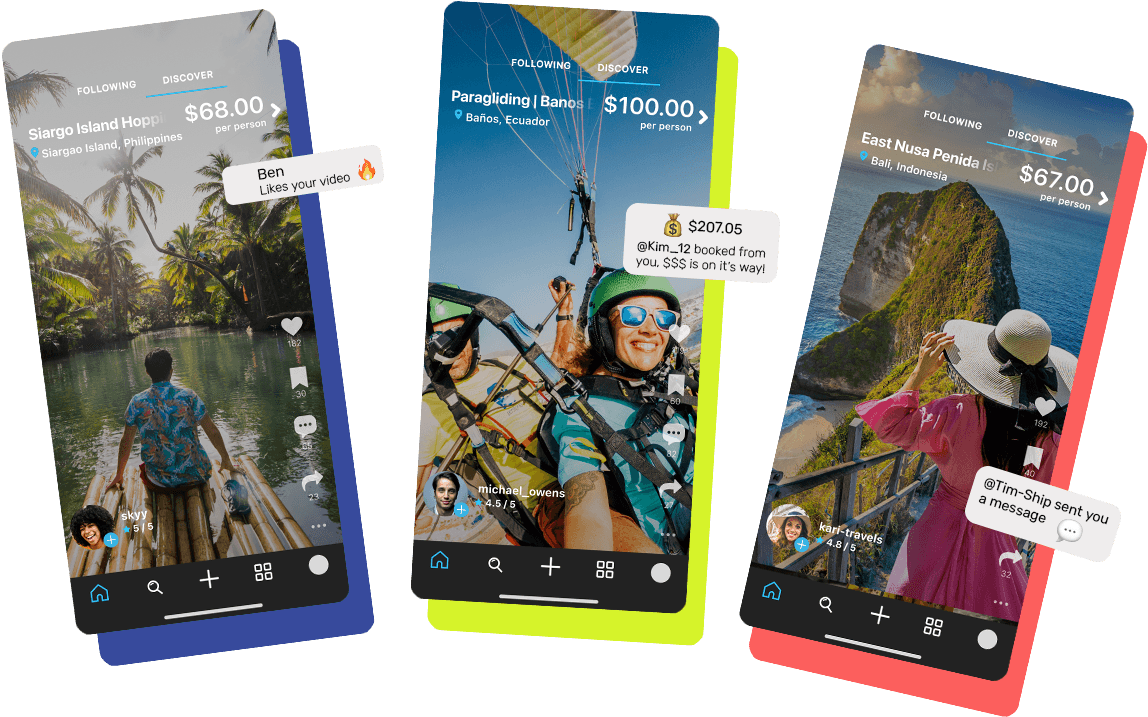
- Creator commission programs. Otsy's Creator Fund pays creators a commission when travelers book from their posts. Each post links to a bookable experience, earnings show in the Creator Portal in the Otsy app, and payouts go to a PayPal account. Creators apply in the app and the Otsy team reviews each application.
What decides how much each source pays
Traffic matters most for display ads, and every other source needs someone to see the post first.
Readers who found your advice reliable are more likely to book through your link, buy your guide or hire you, so audience trust is worth protecting. Recommend only places and products you have used.
Your niche sets who reads you and who wants to reach them: a blog about budget trips for solo travelers draws different readers, and different advertisers, than one about family cruises.
It also matters how readers act on recommendations. A post that explains one day in one city, with what it cost and who it suits, is easier to book from than a list of forty places.
How long it takes
Plan for a long period with little or no income. A new site has no audience and no search history, so the first stretch goes to building both. Sponsors and clients usually want to see an audience first.
We found no public source with a reliable timeline, so treat any promise of a specific number of months with suspicion. For a wider view of how people turn travel into income, see how to get paid to travel.
What a travel blog costs
Costs arrive before income does.
- Domain and hosting. Recurring fees that start on day one.
- Tools and equipment. Email software, photo editing, a camera or phone, a laptop.
- Travel. Flights, lodging and meals for the trips you write about.
- Your time. Planning, writing, editing, photographing, answering readers and promoting the post. For many bloggers this is the largest cost, and nobody sends an invoice for it.
Ask a tax professional how business expenses are treated where you live, and keep receipts from the first purchase. Income from freelance work and commissions is usually taxable too, so bring that question to the same conversation.
How to track your own numbers
Because published averages are scarce, your own records are the data to rely on. The US IRS's small-business recordkeeping guidance says you may choose any system suited to your business, as long as it shows your income and expenses clearly, and that good records help you see where your income comes from. A spreadsheet is enough.
Record these each month:
- Income from each source, listed separately, with the date you were paid and the date you earned it.
- Expenses by category, including the share of each trip that was for the blog (a tax professional can tell you how that share is treated).
- Hours worked, so you can see what an hour of blogging pays.
- Which posts produced clicks, bookings or inquiries.
Tell readers when you earn from a link or a post. The FTC's endorsement guidance says an affiliate relationship should be disclosed clearly and conspicuously on your site, and that it works best placed near the recommendation itself. Its example wording for affiliate links is "I get commissions for purchases made through links in this post." Google separately asks site owners to mark links that are advertisements or paid placements with the "sponsored" value of the link rel attribute.
FAQ
How much do beginner travel bloggers make?
A new blog has no audience yet, so early income is usually small or zero. How quickly that changes depends on how often you publish and how many readers act on your recommendations.
Can you make a living as a travel blogger?
That depends on your costs and on how much of your income comes from each source. We found no public figure for what share of bloggers manage it, so judge the plan on your own numbers after a few months of tracking.
How do travel bloggers get paid?
Each source pays differently. Ad networks and booking partners pay out on their own schedules, sponsors and freelance clients often pay against an invoice, and product sales arrive through whatever checkout you use. Check each program's terms for how and when it pays.
Do travel bloggers have to disclose sponsored posts and affiliate links?
For a US audience, the FTC expects it. Its endorsement guidance covers affiliate commissions, payment from a brand, and free products or perks given in the expectation that you will cover them, and it asks for a clear disclosure close to the recommendation. Rules differ by country, so check where you and your readers live.
Start with a tracking sheet
Open a spreadsheet before you publish your first post, and list each income source and each cost. Add each receipt as you get it, so you can see what the blog costs even in months with no income. When you pick destinations to cover, it also helps to see what travelers can book there; things to do in Las Vegas on Otsy is one example.