
If you are wondering how to start a travel blog, pick one focus, choose a name and a domain, set the site up on a platform you can manage, and publish posts that answer questions travelers really type into a search box. Earning comes later and arrives slowly.
How to start a travel blog in six steps
1. Choose a focus
"Travel" is too wide to be useful. Pick a slice you can write about from experience: a region you know well, a way of traveling (with kids, by train, solo, on a tight budget), or a kind of trip such as long weekends from your home city.
2. Pick a name and a domain
Choose a name that is short and easy to spell after hearing it once. Skip hyphens and numbers, and avoid tying the name to one country if you may write about others. Register the domain in your own account so you keep control of it if you change platforms later.
3. Choose a platform or host
Blogging tools come in two broad kinds. A hosted service runs the software for you, so you publish sooner. Software you install on hosting you arrange yourself takes more setup and gives you more control over design, ads and moving later. Before you pick, read the terms on ads and affiliate links, and check that you can export your posts and use your own domain. Setup usually means arranging hosting, pointing your domain at it and choosing a theme or template.
4. Set up the basics
A few pages should exist before the first post goes live:
- An About page that says who you are, what you cover and how you earn money, if you do.
- A way for readers to contact you.
- Menus that sort posts by destination or topic, tested on a phone, since many readers will arrive on one.
- A privacy page if you collect email addresses or run analytics or ads. Check the rules where you and your readers live.
5. Write the first posts people actually search for
Think about what a traveler asks before a trip, then answer it from your own experience: how to get from the airport to the city center, what a day in one neighborhood looks like, what a weekend cost you, what you would skip next time. Google's SEO Starter Guide suggests thinking about the words a person might search for, and points out that people who know a topic well and people new to it often use different terms. Write for the newcomer.
Include details nobody else has, like the train you missed or the museum that was closed on Mondays. The same guide says not to rehash what others have published.
6. Make your pages findable
Google says you usually don't need to do anything except publish your site on the web, because it finds most pages by following links from pages it already knows. A few habits still help:
- Use URLs with real words in them, such as /lisbon-airport-to-city-center, instead of strings of numbers.
- Give each post a title that is unique and describes the post accurately.
- Write descriptive alt text for each photo, and place the photo near the text it illustrates.
- Search for site:yourdomain.com on Google to see whether your pages are indexed, and use the URL Inspection tool in Search Console to see a page as Google sees it.
Photos and honesty
Use photos you took in the places you describe, and keep them sharp. Prices, opening hours and routes change, so say when you visited and update older posts, as Google's guide recommends. If a trip was hosted or discounted, say so.
If you also review products, such as a camera bag or a travel pillow, the FTC's influencer guidance says you can't talk about your experience with a product you haven't tried. For a place you have not visited, the honest course is to say your post is based on research.
How a travel blog can earn
Many travel blogs combine several of these.
- Display ads. Ad networks place ads on your pages. Many pay based on how many people see or click them, so ads usually matter only after traffic arrives, and terms differ by network.
- Affiliate links. You link to a tour, ticket or product, and you earn a commission when a reader books or buys through that link.
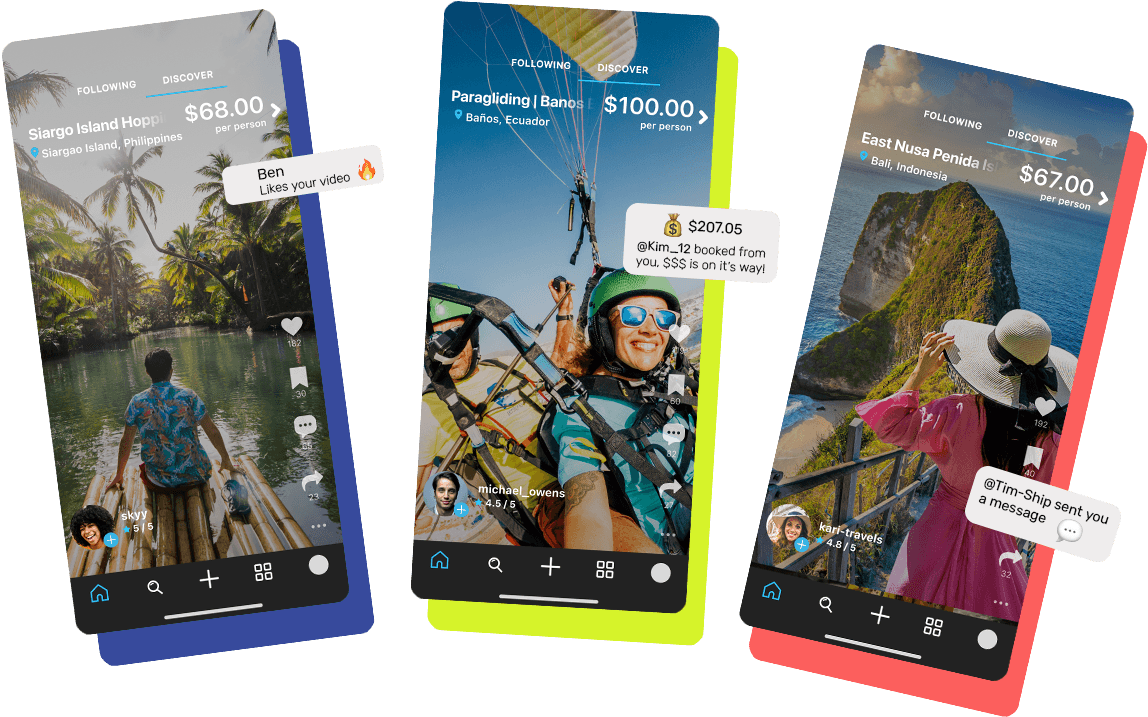
- Creator commissions. If you also post trip content on social platforms, the Otsy Creator Fund pays creators a commission when travelers book from their posts. Each post links to a bookable experience, such as one you can find by destination on Otsy. Joining is free, and the Otsy team reviews applications.
- Sponsored work. A hotel, tourism board or brand pays you, or gives you a free stay or product, in exchange for a mention.
If money or free goods are involved, you have a disclosure to make. The FTC's Disclosures 101 for Social Media Influencers says to disclose any financial, employment, personal or family relationship with a brand, and to place the disclosure with the endorsement, not only on an About page or at the end of a post. Plain terms such as "ad" or "sponsored" work, and vague ones such as "sp" or "collab" do not. For affiliate links, the FTC's Endorsement Guides Q&A says to disclose the relationship clearly and conspicuously on your site, and it suggests wording such as "I get commissions for purchases made through links in this post."
For the wider picture, including jobs and remote work, see our guide to ways to get paid to travel.
Expect traffic to build slowly
Google's guide says there are "no secrets here that'll automatically rank your site first in Google," and that a change to your site can take anywhere from a few hours to several months to show up in search. For a new blog, the first stretch is often mostly readers you send yourself. Keep publishing and updating, and plan on blog income being extra for a while.
FAQ
Do I need experience to start a travel blog?
No. You need trips you can describe in useful detail. Start with one place you know well and answer the questions a first-time visitor would ask.
Do I have to buy a domain?
Many hosted platforms let you start on an address they provide. A domain of your own stays with you if you move platforms.
How long does a travel blog take to get traffic?
There is no fixed answer. Google says a change to your site can take from a few hours to several months to show up in search, so expect slow early months.
Do I have to disclose affiliate links?
In the US, yes. The FTC's Endorsement Guides Q&A says to disclose an affiliate relationship clearly and conspicuously on your site, close to your recommendation. Free or discounted products count as a relationship too, so say so in plain language.
Publish the first post this week
Choose the one question you can answer best from your own trip. Write that post and put it live this week.