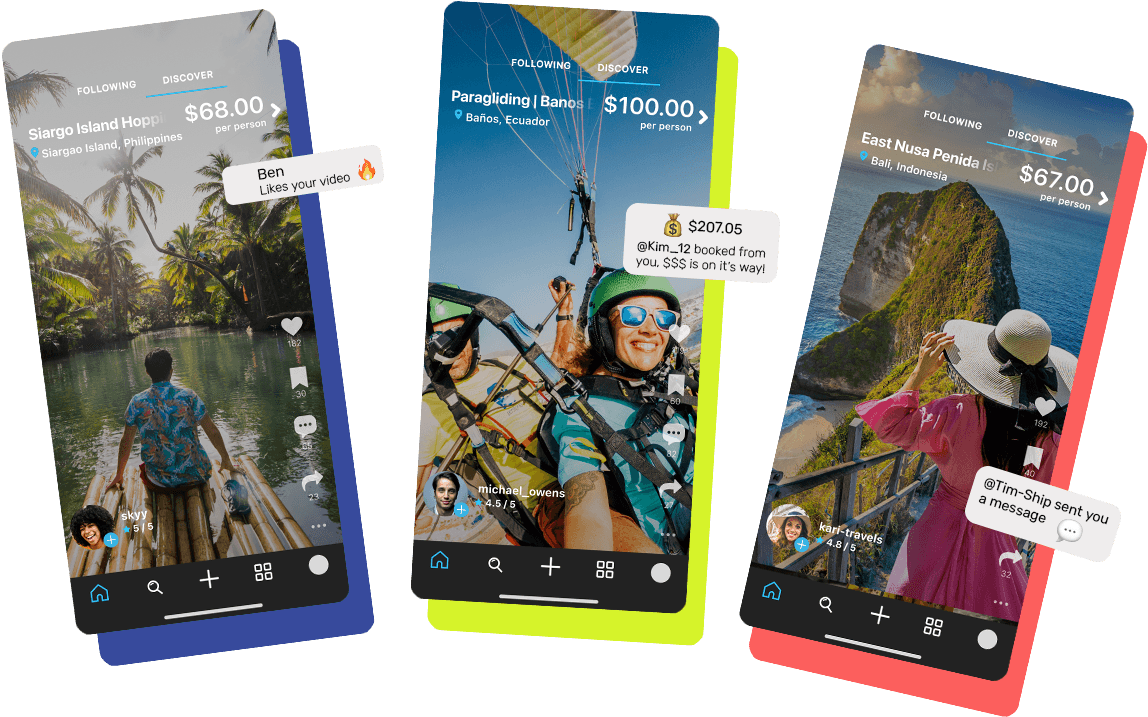


Here is how to become a travel influencer: pick one kind of travel you can describe from first-hand experience, post about it on one or two platforms at a pace you can keep, and tell your audience whenever a brand pays you or gives you something. There is no license for this. People judge the posts by how useful and accurate they are.
How to become a travel influencer: the first four steps
1. Pick a niche and a point of view
A niche is the kind of trip you cover. Weekend city breaks from one airport, travel with a toddler, solo trips on a tight budget, step-free itineraries and food-first travel are all niches. A point of view is the thing you say that someone else wouldn't: you always take the slow train, or you only recommend what you paid for yourself.
Choose something you know well enough to answer follow-up questions about, and that you will still want to cover after the first dozen posts.
2. Choose one or two platforms
Short video, photo posts, a blog and a newsletter each ask for different work. Start with the one you already enjoy making things for, and add a second only when the first runs on a routine. Look at where people in your niche go to find trip ideas, because that is where a new account has the best chance of being found.
3. Post on a schedule you can keep
Decide on a rhythm, such as one post a week, and put it in your calendar. Keep a running list of ideas, and add to it during every trip so you never start from a blank page. Trips are not the only material. A day out near home, a tip you gave a friend or a mistake you made abroad all make usable posts.
4. Make every post useful to someone planning a trip
A good travel post answers the questions a planner would ask. Put these in the video, the caption or the text:
- How long it took. Include travel time to get there and how long the activity itself ran.
- What it cost. Give what you paid or a price range, and say when you went, since prices change.
- Who it suits. Mention age, fitness level, budget or travel style.
- Who should skip it. Saying so shows planners you are not selling them everything.
- How to book. Say whether you reserved ahead or just turned up.
Build trust before you build an audience
People follow travel creators for recommendations, so a recommendation has to be honest. Show the part that disappointed you, even if it was only the queue. If a place changed since you visited, update the post or say so in a comment. For products, the FTC's influencer guidance turns this into a rule: you can't talk about your experience with a product you haven't tried, and if you were paid to promote something you thought was terrible, you can't tell your audience it is great.
Brand relationships and disclosure
Once your posts get attention, tourism boards, hotels and tour operators may offer free stays or tickets, or payment, in return for a post. Agree on the terms in writing before you travel: what you will post and when, and what you get in return.
Then disclose it. The FTC's Disclosures 101 for Social Media Influencers says to disclose any financial, employment, personal or family relationship with a brand. Free or discounted products and other perks count, even when the brand did not ask you to mention that product. A few practical points from the same page:
- Put the disclosure with the endorsement itself, where it is "hard to miss", and not only on your profile page or at the bottom of a caption.
- In a video, say or show it in the video, since a note in the description alone is not enough.
- Use plain words such as "ad," "advertisement" or "sponsored." Shorthand such as "sp" or "collab" is too vague.
Commissions count too. The FTC's Endorsement Guides Q&A says to disclose an affiliate relationship both in a video and in the description near the links, and it suggests wording such as "I get commissions for purchases made through links in this post."
Both pages are US guidance. If you or your audience live elsewhere, check the advertising rules that apply to you as well.
How travel influencers earn
- Link commissions. You post about an experience and link to where it can be booked. When someone books through your post, you earn a commission.
- Brand work. A brand pays you, or provides the trip, in exchange for content. Each deal has its own terms, which is why the written agreement matters.
The Otsy Creator Fund is an example of the first kind. Creators repost travel content, each post links to a bookable experience (you can search experiences by destination on Otsy to see what one looks like), and creators earn a commission when travelers book from their posts. Joining is free, and the Otsy team reviews each application in the app.
A post earns only when travelers book from it, so expect income to build slowly. To see how this fits with jobs and remote work, read our guide to how to get paid to travel.
FAQ
How many followers do you need to become a travel influencer?
There is no official number. Brands and programs set their own requirements, so read the terms before you apply to anything. Link commissions depend on whether people book from what you post.
Do I have to travel full-time?
No. Day trips, weekend breaks and things to do in your own city all make useful travel content. Planners want accurate detail from someone who went.
Do I need to disclose free trips and affiliate links?
In the US, yes. The FTC says that if a brand gives you free or discounted products or other perks and then you mention one of its products, you should disclose it, and its Endorsement Guides Q&A says to disclose an affiliate relationship near the links. Use plain words such as "ad" or "sponsored," placed close to the post or link.
Can I earn from travel posts without brand deals?
Yes. Link commissions work without a sponsor. You post an experience you did, link to it, and earn when a traveler books from your post.
Start with one post this week
Pick one experience you have done, write down how long it took, what it cost, who it suits and who should skip it, and post it.