

Tourism brands and tour operators tend to look for Instagram travel creators whose followers resemble their own guests, and who are easy to work with. Beyond that, what a brand weighs most varies, so ask what it needs before you pitch.
What tourism brands look for in Instagram travel creators
- Audience fit. A walking-tour company wants to reach people who might book a walking tour. Know where your followers live and what kind of trips they plan.
- Content quality and consistency. Footage with clear sound, posted at a rhythm you can keep. A brand scrolling your profile is often checking whether the next post will look like the last ones.
- Engagement that looks genuine. Comments that ask about the price or how to book show that someone is considering a trip.
- A clear niche. Rail travel, say, or diving. When you can describe your focus in one line, a brand can see where it would fit.
Honest reviews matter too. Say what the experience cost and what was less good: your audience trusts your recommendations, and a brand hopes some of that trust carries over to it. Correct disclosure is one less thing for the brand to worry about. Many brands will also prefer someone who replies promptly and agrees what they will deliver and by when, and it helps to ask what the brand wants to get out of the post. A media kit, a short document that answers the questions above, saves everyone from asking them.
Show it before anyone asks
Most of this can be seen on your profile. Pin your best posts for your niche and write a bio line that says what you cover. If you have no past partnerships to point to, post about experiences you paid for and enjoyed, which is the work a brand would be asking you to repeat.
A media kit can be one or two pages and cover:
- who you are and the kind of trips you cover
- a plain description of your audience, using your own analytics with the date you read them
- three or four posts that show your best work
- the formats you offer, such as Reels or carousels
- how to contact you
How Instagram's paid partnership label works
If a brand pays you or gives you something for a post, Instagram has a tool for labeling it. Meta's branded content policies define branded content as a creator's content that features or is influenced by a business partner in exchange for value, "such as monetary payment or free gifts". Those policies say branded content may only be posted with the branded content tool, and that creators must tag the partner with prior permission.
Meta's help page for the label describes how this works:
- You turn on the paid partnership label and tag the brand. The first time you tag a brand, Instagram sends the brand a request.
- Until the brand approves, the post carries the label without the brand's name.
- The brand needs a professional account on Instagram. Once the post is live, the brand gets a notification and can see insights for it.
Meta's eligibility page lists Instagram professional accounts among the surfaces for partnership ads, and says anyone posting branded content needs an "authentic, established presence" that includes a big enough following. Meta gives no number; a brand may have its own.
Meta's policies also say you must meet the disclosure rules that apply to you. In the US, the Federal Trade Commission's Disclosures 101 guide for social media influencers says to disclose any financial, employment, personal or family relationship with a brand, and that this includes getting anything of value, such as free or discounted products or perks. It adds that you should not assume a platform's disclosure tool is good enough, and that you can use it alongside your own clear disclosure. Put the disclosure with the post, in simple words such as "ad" or "sponsored", and skip vague shorthand like "collab". The FTC says foreign laws might also apply, so check the rules where you and your audience live.
What to do before you pitch
- Check that your account is set up for branded content. Meta's label page says to enable branded content first.
- Write your niche in one line and look at your profile the way a stranger would.
- Build the media kit, and update the audience details close to the day you send it.
- Research the brand: what it posts, who it already works with and which experiences it sells.
- Propose one specific idea, with the format, the timing and how you would handle disclosure.
- Say you will review the experience honestly.
Commission links that do not depend on one brand
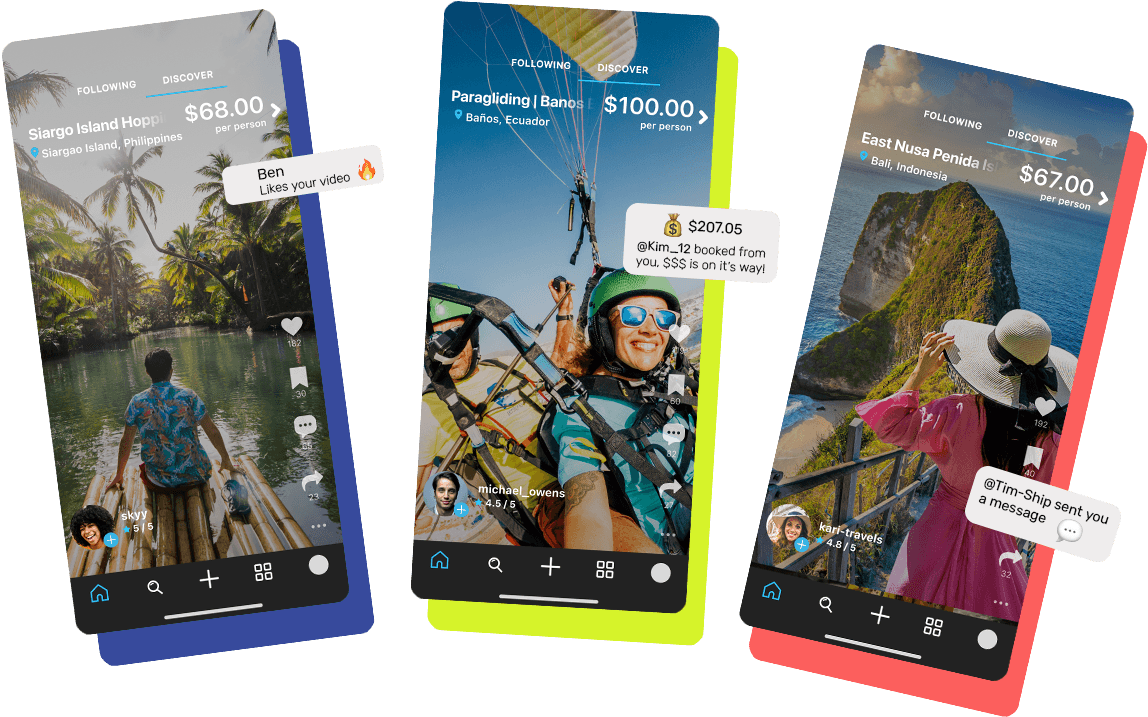
A pitch is one way to earn from travel content. Link-based commission programs are another, and they do not depend on one brand's reply. Otsy's Creator Fund is one: creators repost travel content, for example from Instagram or TikTok, and each post links to a bookable experience. When a traveler books from the post, the creator earns a commission. Earnings show in real time in the Creator Portal in the Otsy app, and payouts go to the creator's PayPal account.
You apply in the app, and the Otsy team reviews the application. Joining is free: you connect PayPal and submit a W-9. Commissions depend on travelers booking, so they are not a fixed income. Pick an experience you have done yourself; searching a destination such as Lisbon on Otsy shows what is bookable there.
A commission is also a financial relationship to disclose. The FTC's Endorsement Guides FAQ answers a question about a video with affiliate links by saying to disclose the affiliate relationship in the video and in the description near the links. On Instagram, that points to saying so in the post itself, next to wherever the link appears. For a wider view of the options, see this guide on ways to get paid to travel.
FAQ
What do tourism brands look for in a travel creator?
It varies by brand. Audience fit, steady content, a clear niche and honest reviews are reasonable things to show, along with correct disclosure and easy communication. Ask each brand what it wants from a post before you send a pitch.
Do I need a media kit to pitch a tour operator?
A brand may ask for one, and having it ready saves a round of emails.
Do I have to use the paid partnership label for a free trip or tour?
Meta's policies name "free gifts" as one kind of exchange of value, and the page does not mention tours specifically. The FTC's Endorsement Guides FAQ says to disclose free travel from a brand, because it could affect how much weight readers give your opinion, and a free tour is the same sort of perk. If a company gives you a tour in return for a post, use the label and also say in the caption that the tour was free.
Can I earn from Instagram travel content without pitching a brand?
Yes, through link-based commission programs, where you earn when someone books through your link. A program may have its own application, commissions depend on bookings so they are not a fixed income, and the relationship needs a disclosure.
Pick one brand and write one pitch
Choose one brand whose guests look like your audience and write a short pitch around a single experience, with your media kit attached.